
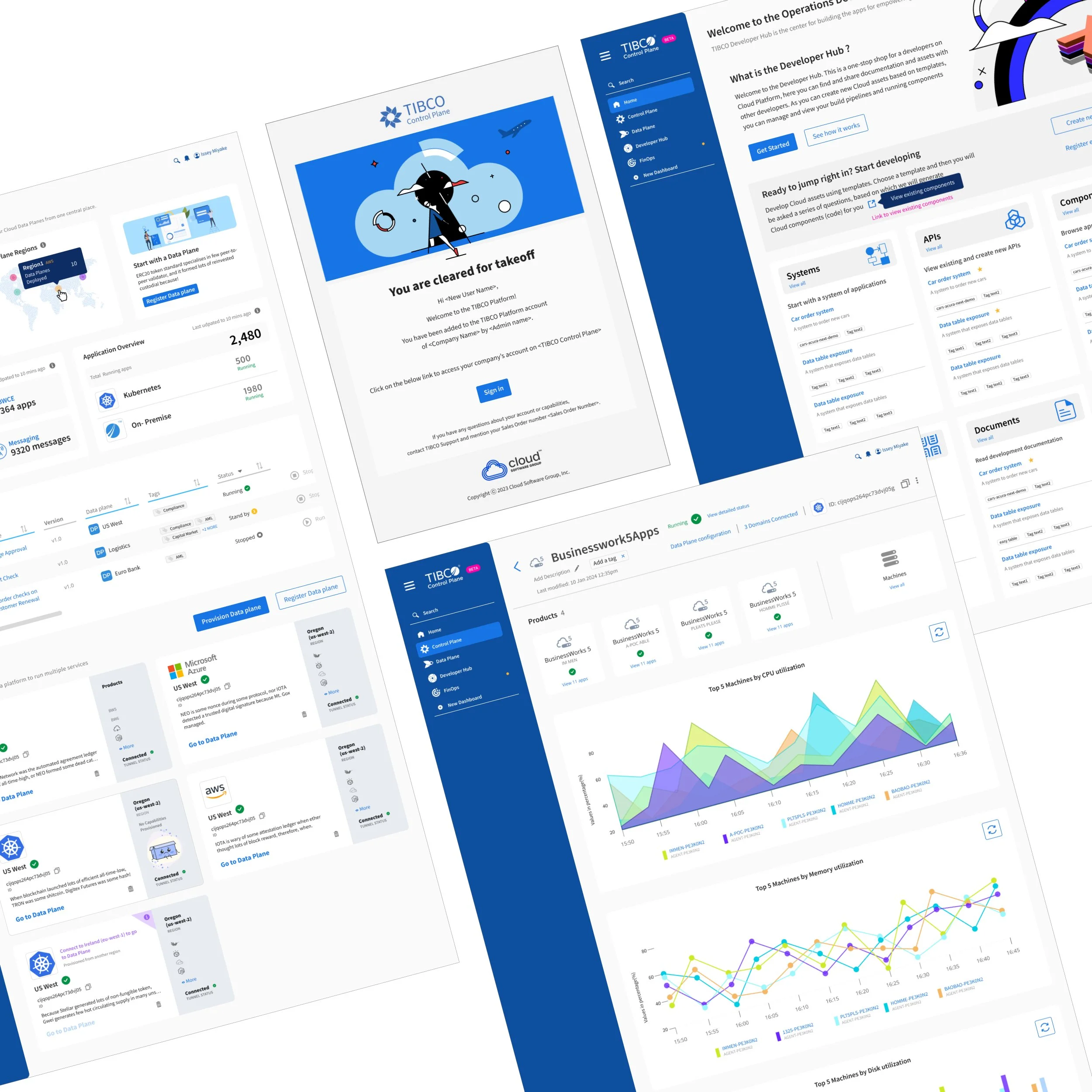
TIBCO: Leading UX Through Enterprise Complexity
CHallenge
Our company mandate was to migrate from federated cloud applications to a coalesced platform of capabilities, reducing the sales catalog from bundles and separate products - Cloud Integration, BusinessConnect, API Management, MDM, and Data Analytics into one product, one SKU. The goal was to bridge each app’s UI to a single consistent experience we called a Single pane of glass.
Solution
The complexity of scale of the platform led us to one solution - a schema approach to mapping out the mental model for the interactions. While common patterns like integration, configuration, deployment, and monitoring stood as foundational models we simply could not predict all the use cases to which the user engaged with the services.
Execution
My role & contribution: Art Direction | Leadership | UI Design & Design System
Team contributors: Engineering Leads | Product Managers | Designers | Users & volunteer testers
Architecture for 2nd digital transformation

Start at the Summit
Every app on the platform possessed its own unique features uncommon to each other but when integrated and collectively folded into a platform proved to be a formidable solution for enterprise companies.
My problem to solve was to assess each product roadmap to:
determine schemas for ux patterns,
derive the features applicable to known use cases
draft wireframes and scope effort to cost out design support.
Background
At the third business quarter of every year, the company holds a product managers summit meeting to present next year's product roadmap. Each PM presents the product roadmap for their application in detail with the Features roadmap, swimlanes for product time frames, the releases dates and any additional key details for the strategic goals. Needless to say the importance of having the roadmap properly outlined is key to resource planning, budget allocations, sales forecasts, and revenue targets. Also in attendance are the CTO, VP of engineering, VP of Sales, and the Revenue team.